होमपेज पर लौटें

स्टोरी फोकस

Jellyfish Can Learn from Mistakes—Even Without a Brain: A Breakthrough in Cognitive Biology

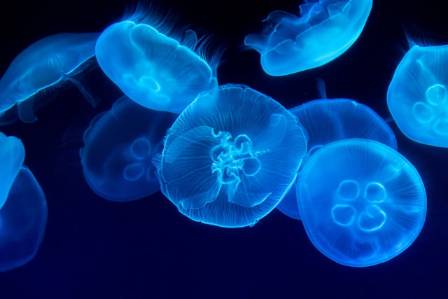
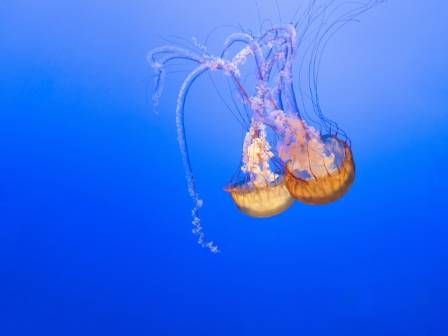
The idea that an animal can learn from experience without a brain sounds like science fiction, yet new research on the Caribbean box jellyfish (Tripedalia cystophora) proves it’s a biological reality. For decades, scientists assumed learning—even basic forms of associative learning—required a centralized nervous system, typically a brain or complex ganglia. Jellyfish, however, defy this fundamental assumption: they lack any concentrated nerve center, relying instead on a diffuse network of neurons spread across their bodies. This discovery not only reshapes our understanding of what it means to “learn” but also raises profound questions about the origins of cognition, suggesting that complex behaviors may have evolved earlier in the animal kingdom than previously thought.

S

Sophia

रिपोर्टर

Jellyfish Can Learn from Mistakes—Even Without a Brain: A Breakthrough in Cognitive Biology

Introduction

The idea that an animal can learn from experience without a brain sounds like science fiction, yet new research on the Caribbean box jellyfish (Tripedalia cystophora) proves it’s a biological reality. For decades, scientists assumed learning—even basic forms of associative learning—required a centralized nervous system, typically a brain or complex ganglia. Jellyfish, however, defy this fundamental assumption: they lack any concentrated nerve center, relying instead on a diffuse network of neurons spread across their bodies. This discovery not only reshapes our understanding of what it means to “learn” but also raises profound questions about the origins of cognition, suggesting that complex behaviors may have evolved earlier in the animal kingdom than previously thought.

What Is a “Brain,” and Why Don’t Jellyfish Have One?

To grasp the significance of the jellyfish study, we first need to redefine what constitutes a brain. Contrary to the human brain—a large, folded organ responsible for memory, decision-making, and complex processing—a brain in biological terms is simply a dense cluster of nerve cells (neurons) that integrates sensory input and coordinates motor output. Most animals, even simple invertebrates like worms or snails, have at least rudimentary centralized nerve structures called ganglia: small, localized clusters that act as mini “control centers” for specific body regions. Jellyfish, along with their close relatives like sea cucumbers, sea urchins, and coral, are among the few exceptions. Instead of ganglia or a brain, they possess a “nerve net”—a loose, interconnected web of neurons that runs through their bell-shaped bodies and tentacles. This network can detect stimuli like light, touch, and chemical signals, but it lacks the central integration hub that scientists long believed was essential for learning.

The Caribbean Box Jellyfish Study: How Researchers Proved “Brainless Learning”

The groundbreaking research, published in a leading journal, focused on the Caribbean box jellyfish, a small (less than 2 inches wide) species found in mangrove swamps of the Caribbean and Gulf of Mexico. These jellyfish have a unique visual system: 24 eyes distributed across their bell, allowing them to detect obstacles like mangrove roots and avoid collisions—a critical skill for survival in their cluttered habitat. To test if the jellyfish could learn, researchers designed a controlled experiment that mimicked their natural environment. They placed the jellyfish in a circular tank lined with vertical stripes: the stripes were dark enough to simulate mangrove roots, while the tank’s walls were clear (mimicking open water). Initially, the jellyfish swam into the stripes repeatedly, as they could not distinguish between the dark patterns and real obstacles. Over time, however, the jellyfish began to adjust their behavior: after just 7.5 minutes of exposure, they reduced their collision rate by 50%, swimming around the stripes with increasing precision. To rule out other factors (like fatigue or habituation to the tank), the researchers varied the stripe contrast and repeated the experiment—each time, the jellyfish learned to avoid the “obstacles” faster, demonstrating associative learning: linking the visual cue (striped pattern) to the negative outcome (collision) and modifying their behavior accordingly.

The Science Behind Brainless Learning: Individual Neurons as Learning Units
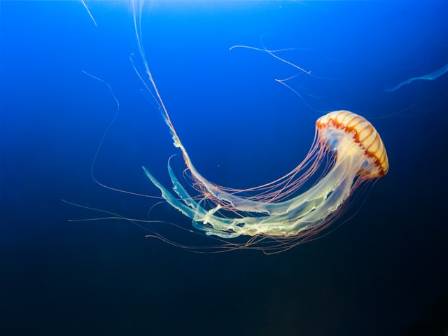
The most intriguing question raised by the study is: How do jellyfish learn without a brain? Scientists hypothesize that the answer lies in individual neurons or small local networks within their nerve net. In animals with brains, learning occurs when synapses (connections between neurons) strengthen or weaken in response to experience—a process called synaptic plasticity. For jellyfish, which lack a central brain to coordinate these changes, the researchers suggest that synaptic plasticity may occur locally, within specific regions of the nerve net associated with sensory input (like the eyes) and motor response (like swimming). Some experts go further, proposing that individual neurons themselves may be capable of basic learning, acting as tiny, independent processing units. This challenges the long-held view that learning requires a centralized “decision-maker” and suggests that cognition may have evolved from simple, decentralized systems. If individual neurons can learn, it implies that the building blocks of intelligence are far more basic than we imagined—potentially dating back to the earliest animals, which lacked brains but possessed simple nerve networks.

Implications for Cognitive Biology and Evolution

The jellyfish study has far-reaching implications for our understanding of cognition and evolution. For one, it pushes back the origin of learning to at least 500 million years ago, when jellyfish and other cnidarians first appeared—hundreds of millions of years before the evolution of complex brains in vertebrates. This suggests that learning may have evolved not as a “advanced” trait tied to big brains but as a basic survival mechanism, even in the simplest animals. Additionally, the discovery opens new avenues for research in neuroscience: studying jellyfish’s nerve net could help scientists understand how synaptic plasticity works in decentralized systems, potentially inspiring innovations in artificial intelligence (AI), such as designing decentralized neural networks that learn without a central processor. It also forces us to rethink how we define “intelligence”: intelligence may not be measured by brain size or complexity, but by an animal’s ability to adapt to its environment—something jellyfish do remarkably well, despite their lack of a brain.

Unanswered Questions and Future Research

While the study confirms that jellyfish can learn, many questions remain. For example, how long do jellyfish retain their learned behaviors? Do they forget over time, or can the learning be reinforced with repeated exposure? Researchers also want to know if other jellyfish species (or related animals like sea anemones) share this ability, and if so, how their nerve nets differ in structure and function. Another key question is whether the jellyfish’s learning involves the same molecular mechanisms (like changes in neurotransmitter release) as learning in brained animals. Future studies will likely use advanced techniques like single-neuron imaging to observe how synapses change in the jellyfish’s nerve net during learning, providing a closer look at the biological basis of brainless cognition. These investigations could not only unlock the secrets of jellyfish behavior but also shed light on the universal principles of learning that apply across all animal life.

Conclusion

The discovery that Caribbean box jellyfish can learn from mistakes without a brain is a testament to nature’s ingenuity and the limits of our prior assumptions about cognition. What was once thought impossible—associative learning without a centralized nervous system—has been proven in one of the simplest animals on Earth. This breakthrough reminds us that intelligence comes in many forms, and that the ability to adapt and learn is not the exclusive domain of brained creatures. As researchers continue to explore the mysteries of jellyfish’s nerve net, we may uncover even more surprises about the origins and diversity of cognitive abilities. In the end, the jellyfish teaches us a valuable lesson: sometimes, the most complex behaviors arise from the simplest systems.

और पढ़ें

पेड़ों के 3 कार्य - क्यों आपको पेड़ उपहार के रूप में देने चाहिए

पेड़ों के 3 कार्य - क्यों आपको पेड़ उपहार के रूप में देने चाहिए

पेड़ हमारे दिलों के बहुत करीब हैं - और इसके अच्छे कारण हैं! जंगल न केवल शांति के ओएसिस होते हैं और आराम करने की जगह, बल्कि वे वैश्विक पारिस्थितिकी तंत्र में भी महत्वपूर्ण भूमिका निभाते हैं। इस ब्लॉग में, आप जान सकते हैं कि पेड़ क्या कार्य करते हैं और क्यों उन्हें बचाना आवश्यक है ताकि हम एक बेहतर भविष्य की ओर बढ़ सकें। क्योंकि हम पेड़ों के बिना नहीं रह सकते।

आशीष
22 स्वस्थ नाश्ते के विचार जो आपको नींद से दूर रखेंगे

22 स्वस्थ नाश्ते के विचार जो आपको नींद से दूर रखेंगे

हम अपने मीठे और नमकीन स्वस्थ नाश्ते के विचारों को बहुत गंभीरता से लेते हैं। क्यों? खैर, आप जानते हैं कि जब आप सुबह सबसे पहले व्यायाम करते हैं, तो आप पूरे दिन स्वस्थ भोजन करते हैं और अधिक पानी पीते हैं और कुल मिलाकर बेहतर महसूस करते हैं? हम उस विचार को दिन के पहले भोजन पर लागू करते हैं, जैसे कि एक इरादा तय करना: इसे एक स्वस्थ और स्वादिष्ट नाश्ता बनाएं - शायद एक स्मूदी बाउल या स्टील-कट ओट्स या मैक्सिकन-स्टाइल तले हुए अंडे टॉर्टिला के साथ - और यह एक स्वस्थ और स्वादिष्ट दिन होगा। (और नाश्ते के समय अच्छी चीजें खाने का सबसे आसान समय होता है। ऑफिस की रसोई में मीठे स्नैक्स दिखाई दे सकते हैं और शानदार डिनर के निमंत्रण आपके पास आ सकते हैं, लेकिन नाश्ता पूरी तरह से आपके नियंत्रण में है।) आप हमारे साथ हैं? चलिए!

धैर्य
खाद्य पेयरिंग की कला स्वादों को सामंजस्यपूर्ण बनाने और आपके पाक अनुभव को बढ़ाने के लिए एक वैश्विक मार्गदर्शक है।

खाद्य पेयरिंग की कला स्वादों को सामंजस्यपूर्ण बनाने और आपके पाक अनुभव को बढ़ाने के लिए एक वैश्विक मार्गदर्शक है।

स्वाद सामंजस्य को समझना दुनिया भर और उससे परे के खाद्य पेयरिंग में महारत हासिल करने की कुंजी है। दुनिया भर में पारंपरिक खाद्य पेयरिंग की खोज करने से व्यक्तिगत आनंद और पाक ज्ञान को बढ़ाने के कई लाभ मिलते हैं। इससे सांस्कृतिक सराहना और स्वाद के क्षितिज का विस्तार होना चाहिए, साथ ही संतुलित और सामंजस्यपूर्ण व्यंजनों के बारे में सीखने और पाक कौशल को बढ़ाने का अवसर मिलता है। पारंपरिक खाद्य पेयरिंग सामाजिक और वार्तालाप संबंधी लाभ भी प्रदान कर सकती है।

ईशा
पेट्रोनास टावर्स: मलेशिया की आधुनिक वास्तुकला के दो प्रतीक

पेट्रोनास टावर्स: मलेशिया की आधुनिक वास्तुकला के दो प्रतीक

कुआलालंपुर के आकाशरेखा से ऊँचा उठते हुए, पेट्रोनास टावर्स केवल ऊँची इमारतें नहीं हैं — ये मलेशिया की महत्वाकांक्षा, नवाचार और सांस्कृतिक गर्व का प्रतीक हैं।

स्नेहा
The 2025 Richest Cricket Players, in Order

The 2025 Richest Cricket Players, in Order

These are the high paid cricketers on the planet, ranked from ten to one.

DDavid
Four Stages And Five Tips to Master Realistic Portrait Painting

Four Stages And Five Tips to Master Realistic Portrait Painting

Painting a striking portrait that you can proudly showcase or sell is a dream for many artists. Yet, the challenge of capturing lifelike features, expressions, and flesh tones can often deter painters from venturing into portrait work.
CClaire
समुद्र तट आपके मानसिक स्वास्थ्य के लिए क्यों अच्छा है?

समुद्र तट आपके मानसिक स्वास्थ्य के लिए क्यों अच्छा है?

जब सूरज निकल रहा हो और मौसम गर्म होने का पूर्वानुमान हो, तो समुद्र तट पर जाना ज़्यादातर लोगों के लिए आसान होता है। लेकिन, समुद्र तट को मानसिक स्वास्थ्य के लिए इतनी बेहतरीन जगह क्या बनाता है? तीन शब्द- पानी, सूरज और हवा। ये सभी प्राकृतिक तत्व मानसिक स्वास्थ्य के लिए किसी न किसी रूप में लाभ प्रदान करते हैं जो दिमाग को आराम देने में मदद करते हैं और सामाजिक मेलजोल का अवसर प्रदान करते हैं।
अंशुल
African animal art

African animal art

For centuries, African animal art has served as a means for various tribes to illustrate the intricate bond between humans and the natural world. Symbolism lies at the heart of this artistic tradition. From ancient cave paintings to intricate sculptures and ceremonial masks, African depictions of animals have continually evolved while retaining their cultural significance.

DDaniel Thompson
10 मजेदार तथ्य हैं भेड़ों के बारे में

10 मजेदार तथ्य हैं भेड़ों के बारे में

भेड़े पहले जानवरों में से एक थीं जिन्हें पालतू बनाया गया। कनाडा में, भेड़ों को मांस, दूध और ऊन उत्पादन के लिए खेतों पर पाला जाता है और इन्हें शौकिया फार्मों पर साथी जानवरों के रूप में भी रखा जाता है।

आकाश
Crafting Your Dream Home: A Comprehensive 10-Step Guide

Crafting Your Dream Home: A Comprehensive 10-Step Guide

Embarking on the journey to build your dream home is an exciting yet intricate process. Below unfolds a detailed roadmap encompassing 10 essential steps that provide a panoramic view of the construction venture. Each step acts as a crucial building block, ensuring the realization of your dream home. Delve into the intricacies of each stage as we unravel the key elements involved in crafting your dream abode.

HHannah Grace