होमपेज पर लौटें

स्टोरी फोकस

What Is Felting & How Does It Work?

Felting, the art of transforming animal fibers into dense, durable fabric, holds the distinction of being humanity’s earliest man-made textile—with a history spanning over 6,000 years. Archaeological discoveries have unearthed felt clothing, shelter materials, and ritual objects in tombs across regions where nomadic sheep herding thrived, from the Eurasian steppes to ancient Mesopotamia. These artifacts not only showcase felting’s practicality (its warmth, water resistance, and versatility) but also its cultural significance, serving as a testament to early humans’ ingenuity in utilizing natural resources. At Herdy, our love for wool’s tactile charm and creative potential led us to craft a needle felting kit, designed to invite enthusiasts of all skill levels to explore this timeless craft. Whether you’re curious about felting’s origins, eager to understand its scientific underpinnings, or ready to try your hand at creating something unique, this guide will unlock the wonders of felting—from its biological mechanics to its diverse techniques and modern applications.

O

Olivia Martinez

रिपोर्टर

What Is Felting & How Does It Work?

Introduction to Felting: The World’s Oldest Man-Made Textile

Felting, the art of transforming animal fibers into dense, durable fabric, holds the distinction of being humanity’s earliest man-made textile—with a history spanning over 6,000 years. Archaeological discoveries have unearthed felt clothing, shelter materials, and ritual objects in tombs across regions where nomadic sheep herding thrived, from the Eurasian steppes to ancient Mesopotamia. These artifacts not only showcase felting’s practicality (its warmth, water resistance, and versatility) but also its cultural significance, serving as a testament to early humans’ ingenuity in utilizing natural resources. At Herdy, our love for wool’s tactile charm and creative potential led us to craft a needle felting kit, designed to invite enthusiasts of all skill levels to explore this timeless craft. Whether you’re curious about felting’s origins, eager to understand its scientific underpinnings, or ready to try your hand at creating something unique, this guide will unlock the wonders of felting—from its biological mechanics to its diverse techniques and modern applications.

The Science Behind Felting: Why Wool Fibers Bond

The magic of felting lies in the unique structure of animal fibers, most notably wool. Unlike plant-based fibers (such as cotton or linen) or synthetic materials, wool and other mammalian fibers (including human hair, alpaca, and mohair) possess a microscopic design that enables them to bond seamlessly when manipulated. Each individual wool fiber consists of a solid, flexible core (the cortex) surrounded by a protective layer of overlapping scales—tiny, hair-like protrusions that point away from the fiber’s root. To the naked eye, these scales are invisible, but under a microscope, they resemble sharp, hook-like thorns lying flat against the cortex at rest. When wool is exposed to moisture, heat, or mechanical agitation (such as rubbing or poking), these scales flare outward, lifting away from the core. Their jagged edges then catch and interlock with neighboring fibers, creating a tangled network. As this process continues—whether through repeated compression, stabbing, or chemical treatment—the fibers are forced closer together, eliminating air gaps and forming a dense, cohesive fabric. This natural bonding is irreversible: once felted, the fibers cannot be separated back into their original loose state, making felt a remarkably sturdy and long-lasting material.

The Three Core Felting Methods

Felting has evolved into three primary techniques, each leveraging the fiber’s scaling structure but differing in tools, materials, and applications. From the traditional wet felting used for large-scale projects to the precise dry felting of needlework and the historical carroting method for hat-making, each approach offers distinct advantages and creative possibilities. Understanding these methods allows crafters to choose the right technique for their project, whether they’re crafting a cozy scarf, a detailed figurine, or a vintage-style hat.

Wet Felting: Water, Soap, and Agitation

Wet felting is the oldest and most widely used method, relying on water (preferably hot), soap, and mechanical agitation to bond fibers. The process begins with laying out thin layers of loose wool roving or batting, crisscrossing the fibers to ensure even density. Hot water—often mixed with mild soap to reduce surface tension—is then sprayed or poured over the wool, saturating every strand. The key step is agitation: crafters repeatedly press, rub, and roll the wool (either by hand or using a rolling pin, bamboo mat, or washing machine) to encourage the scales to flare and interlock. As the fibers tangle, the wool shrinks and compacts, transforming from fluffy roving into a smooth, dense fabric. Wet felting works best with fibers that have strong scaling, such as sheep’s wool (particularly breeds like Merino or Shetland), alpaca, and mohair (from Angora goats). It can also be done with rabbit angora or even rodent fur (like beaver or muskrat), though sourcing these materials is less common today. Ideal for creating large items like blankets, rugs, bags, and clothing, wet felting allows for vibrant color blending—crafters can layer dyed wool to achieve gradient effects or intricate patterns. The finished product is naturally water-resistant and insulating, making it perfect for outdoor or functional use.

Needle Felting: Dry Felting with Precision
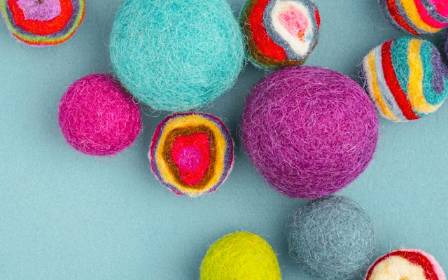
Needle felting, a dry method that requires no water, has gained popularity for its versatility and ability to create detailed, three-dimensional objects. Instead of relying on moisture and agitation, this technique uses a special barbed needle—with tiny notches along its shaft—to physically tangle fibers. When the needle is repeatedly stabbed into a clump of loose wool, the barbs catch individual fibers and pull them downward, forcing them to interlock with the underlying fibers. Over time, this process compacts the wool into a firm, sculptable shape, allowing crafters to build up forms gradually. Herdy’s needle felting kit uses this method, providing everything needed to create adorable woolen figures (like our signature Herdy characters) with minimal tools. Needle felting is ideal for small projects: figurines, jewelry, embellishments for clothing or accessories, and even detailed art pieces. It offers precise control, letting crafters add fine details (such as facial features or textures) with ease. Unlike wet felting, which works best with longer fibers, needle felting can use shorter wool scraps or blended fibers, making it a sustainable option for upcycling. The learning curve is gentle, making it accessible to beginners, while advanced crafters can push the boundaries with complex sculptures and realistic designs.

Carroting: The Niche Hat-Making Technique

Carroting is a historical, specialized felting method primarily used to produce high-quality hats—particularly the iconic top hats and bowlers of the 18th and 19th centuries. Unlike wet or needle felting, carroting relies on a chemical “agitator” to alter the fibers: beaver, rabbit, or hare skins are soaked in a dilute solution of mercuric nitrate (Hg(NO3)2), a toxic mercury compound. This chemical treatment swells the fiber scales, making them more receptive to bonding when pressed and dried. The name “carroting” derives from the distinctive orange hue that the thin, side fur of the skins develops when dried in an oven—resembling the color of a carrot. While effective for creating stiff, durable hat felt, carroting is now largely obsolete due to its health risks. Hat makers (known as “hatters”) were regularly exposed to mercury fumes and skin contact with mercuric nitrate, leading to chronic mercury poisoning. This condition, also called Korsakoff’s syndrome, caused symptoms like slurred speech, uncontrollable tremors, balance issues, extreme shyness, and in severe cases, hallucinations and cognitive decline. It is widely believed that this historical hazard gave rise to the idiom “mad as a hatter,” immortalized in Lewis Carroll’s Alice’s Adventures in Wonderland. Today, modern hat makers use safer alternatives—such as steam, pressure, or non-toxic chemical treatments—to achieve the same stiffening effect without the dangers of mercury.

The Cultural Legacy of Felting

Beyond its practical applications, felting has left an indelible mark on cultures worldwide. For nomadic communities, felt was a lifeline: used to construct yurts (portable tents), clothing, and blankets that withstood harsh climates. In Mongolia, for example, felt-making is a sacred craft passed down through generations, with each family having unique patterns and techniques. In Europe, medieval artisans used felt for armor padding, church vestments, and household items, while in North America, Indigenous peoples crafted felt from beaver fur for hats and clothing, playing a role in the fur trade era. Today, felting has experienced a renaissance as a sustainable, handmade art form. Crafters and designers embrace felting for its eco-friendliness (wool is biodegradable and renewable) and its ability to create one-of-a-kind pieces. From high-fashion runways featuring felt garments to grassroots workshops teaching needle felting to children, the craft continues to evolve while honoring its ancient roots. It also serves as a form of mindfulness, with the repetitive motions of felting—whether stabbing a needle or rolling wet wool—providing a calming, meditative experience for many enthusiasts.

Getting Started with Felting: Tips for Beginners

If you’re eager to try felting, here are some essential tips to help you begin your journey. For wet felting: Start with high-quality sheep’s wool roving (Merino is great for beginners due to its softness and easy felting properties), use hot (but not boiling) water, and be patient—agitation takes time, and rushing can lead to uneven felting. Invest in a bamboo mat or bubble wrap to make rolling easier, and experiment with small projects (like coasters or keychains) before moving on to larger items. For needle felting: Use a foam pad to protect your hands and the needle, start with a firm base (like a wool ball) and build up layers gradually, and choose the right needle size—finer needles for details, thicker needles for shaping. Herdy’s needle felting kit includes pre-cut wool, a barbed needle, and step-by-step instructions, making it a perfect starting point. Remember to handle felting needles with care (they are sharp!) and avoid over-stabbing, which can break the needle or damage the wool. Finally, embrace imperfection—felting is a tactile, organic craft, and each piece will have its own unique character. Whether you’re drawn to the historical depth of wet felting, the precision of needle felting, or the curiosity of carroting’s legacy, felting offers endless opportunities for creativity, connection to nature, and appreciation for a craft that has stood the test of time.

और पढ़ें

Best handling cars

Best handling cars

Automotive handling has undergone a remarkable transformation over the decades. While some purists lament the digital influence in modern cars, others celebrate the newfound capabilities enabled by technology — feats that would’ve been unthinkable in the not-so-distant past.

PPaul
7 Creative Ways to Use Felt Scraps and Be Happy!

7 Creative Ways to Use Felt Scraps and Be Happy!

Felt scraps are the hidden gems of crafting—those tiny, colorful bits left over from bigger projects that hold endless creative potential. Instead of letting them gather dust in a drawer, turning them into handmade treasures is a joyful, meditative way to embrace creativity, reduce waste, and add personal charm to your life (or gifts!). Whether you’re a seasoned crafter or a beginner looking for simple, satisfying projects, these 7 ideas will turn your felt scraps into something special—all while sparking happiness in the process.

CCharles
केले के 11 सबूत वाले हेल्थ बेनिफिट्स

केले के 11 सबूत वाले हेल्थ बेनिफिट्स

केले को छीलने पर उसमें नरम, मीठा स्वाद दिखता है जो एकदम फ्रूटी मज़ा है।
राधा
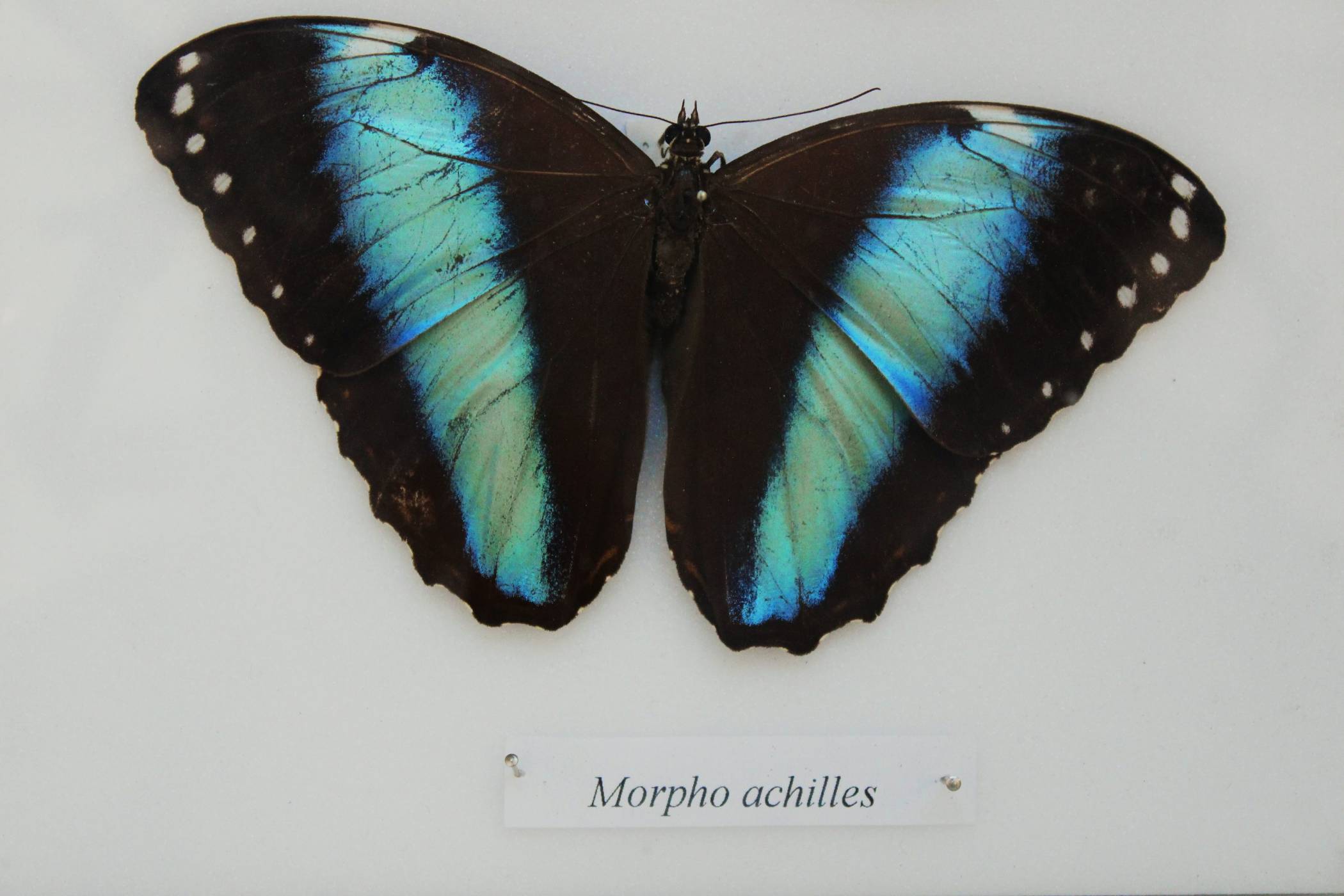
मॉर्फो तितली के बारे में जानने लायक 8 हैरान करने वाले फैक्ट्स

मॉर्फो तितली के बारे में जानने लायक 8 हैरान करने वाले फैक्ट्स

तितली हल्के से पत्ते पर बैठती है, उसके नाज़ुक पंख हल्के से हिलते हैं

शिवम्
The Great Egret A Graceful Bird and a Story of Conservation Victory

The Great Egret A Graceful Bird and a Story of Conservation Victory

The Great Egret, with the scientific name Ardea alba, is an extraordinarily elegant bird that draws attention with its bright white feathers and dignified manner. You’ll often spot it gliding smoothly over wetland areas or standing completely still in shallow water. As part of the heron family, Ardeidae, this bird lives in a range of water-based habitats across the globe. This piece delves into the Great Egret’s physical traits, behaviors, living environments, conservation status, and its importance in both ecology and culture.
JJoseph Bennett
मृतकों की कला: रोम के पेड़ों में बसी खूबसूरती

मृतकों की कला: रोम के पेड़ों में बसी खूबसूरती

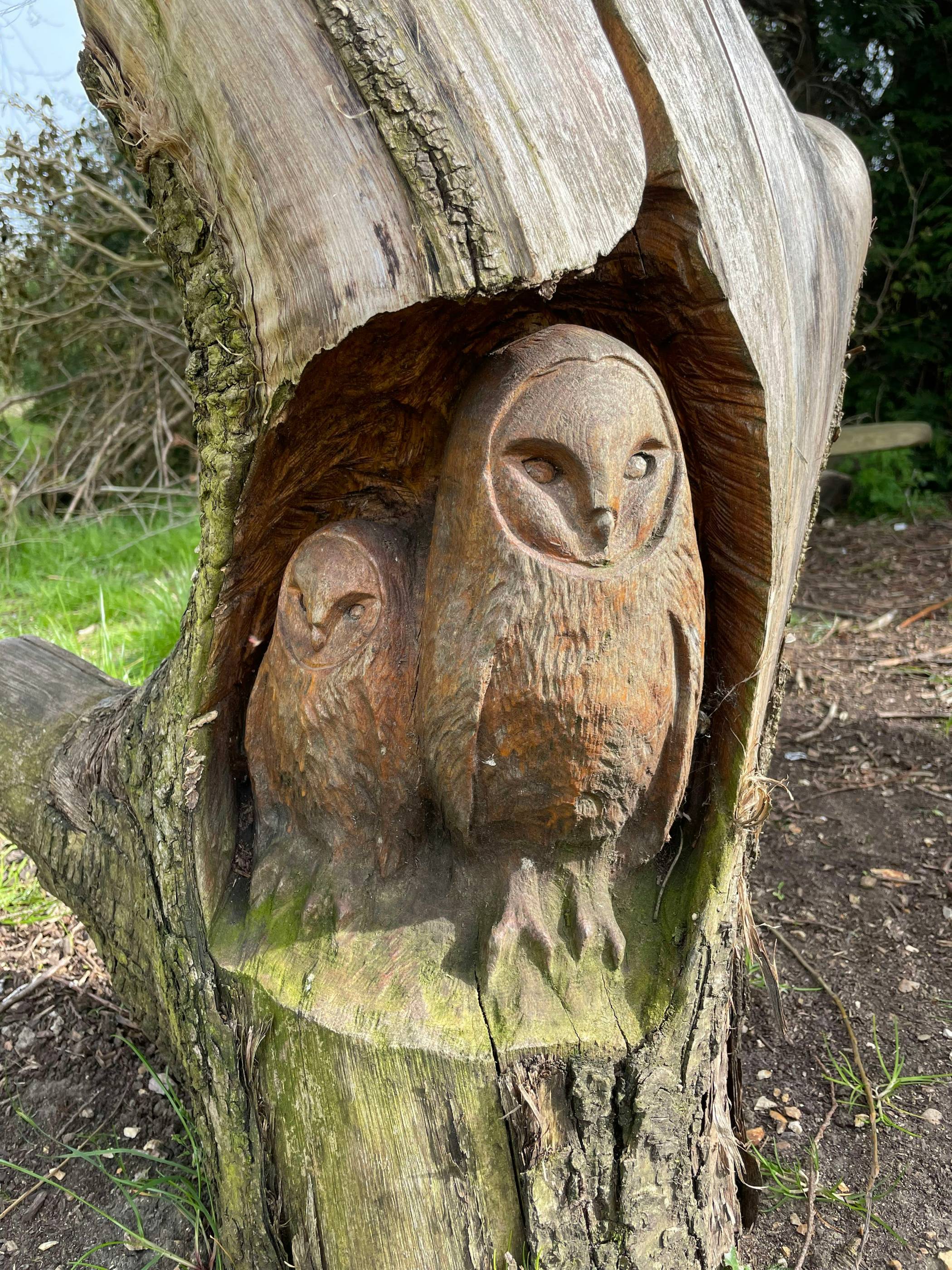
रोम: 22 वर्षीय रोमन मूर्तिकार एंड्रिया गैंडिनी, इटरनल सिटी के मृत पेड़ों के ठूंठों को कला के बहुत प्रशंसनीय टुकड़ों में बदलकर अपना नाम बना रहे हैं। गैंडिनी, जिन्होंने लगभग पाँच साल पहले पेड़ों पर नक्काशी शुरू की थी, ने शुक्रवार को विशाल विला पैम्फिली पार्क में अपने 66वें ठूंठ को काटा। उनके पास काम करने के लिए बहुत सारा कच्चा माल है। रोम को यूरोप के सबसे हरे-भरे शहरों में से एक के रूप में जाना जाता है, जहाँ 313,000 पेड़ इसके कई पार्कों को भरते हैं और शहर के केंद्र में सड़कों पर लगे हैं। हालाँकि, कई पेड़ लगभग एक सदी पहले लगाए गए थे और अब कमज़ोर हो गए हैं या मर रहे हैं। यह देखकर कि उन्हें किस तरह से उपेक्षित किया गया था, गैंडिनी ने कार्रवाई करने का मन बनाया।

नीर
Machu Picchu’s Hidden Truths: A Journey Beyond the Surface

Machu Picchu’s Hidden Truths: A Journey Beyond the Surface

When Hiram Bingham III arrived at the remote mountaintop settlement in 1911, he thought he had uncovered Vilcabamba—the last refuge of the Incas during the Spanish conquest. For decades, Bingham insisted he had found the legendary Lost City. However, later discoveries revealed that the true Vilcabamba lay deep in the jungle, about 50 miles away. Interestingly, Machu Picchu was never truly lost—local farmers were already living on the site when Bingham arrived.

PPheobe
हिरण के बारे में 15 मजेदार तथ्य

हिरण के बारे में 15 मजेदार तथ्य

दुनिया भर में कई हिरण प्रजातियां बिखरी हुई हैं। सफेद पूंछ वाले हिरण, ओडोकोइलस वर्जिनस, एक ही पशु परिवार (सेरविडे) से संबंधित हैं जो मूस, एल्क और हिरन के रूप में हैं। वे अमेरिका के मूल निवासी हैं, लेकिन यूरोप, दक्षिण प्रशांत और कैरिबियन से मिलवाया गया है। यहां इन सामान्य वुडलैंड जीवों के बारे में कुछ मजेदार तथ्य दिए गए हैं।

दीपिका
A New Strategy for Preserving the Blue Ridge Mountains

A New Strategy for Preserving the Blue Ridge Mountains

A pioneering conservation initiative in the Blue Ridge Mountains is demonstrating how science and community partnership can forge a powerful new model for protecting our natural landscapes.

AAlexander Gray
The 11 Ideal Places for America's Biggest Wave Lovers

The 11 Ideal Places for America's Biggest Wave Lovers

The nation's finest surf communities are vibrant coastal destinations where crashing waves meet established surfing traditions, stretching from the Pacific coastline to Atlantic shores.

JJack Edwards